Walima Style
Walima Groom Outfits: Sherwani, Prince Coat or Suit?
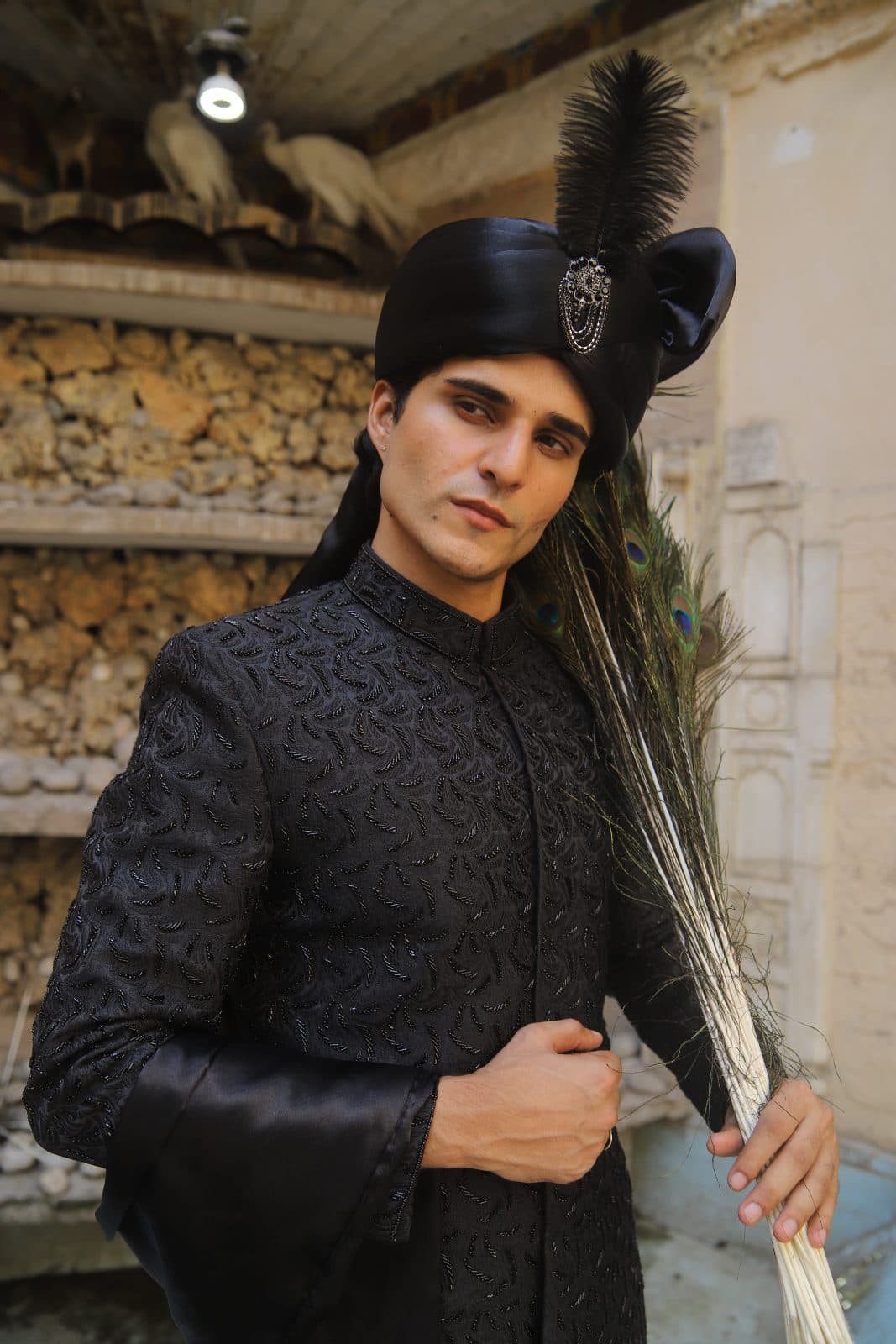
A suit is not compulsory for the Walima. Choose a sherwani when you want the reception to retain a strong heritage presence, a prince coat when you want South Asian formality with a shorter tailored line, and a suit when the event has an intentionally Western or black-tie character. Venue, season, fit and the bride’s outfit should settle the choice.
Real grooms are often negotiating expectations as much as clothes. In one r/pakistan discussion, a Lahore groom planning a heritage setting questioned the assumed three-piece-suit rule. Another r/DesiWeddings thread weighed sherwani, prince coat and tuxedo with limited time for alterations. These accounts reveal the decision pressure; they do not define Pakistani custom.
Compare the role
Sherwani, prince coat and suit at a glance
| Decision | Sherwani | Prince coat | Suit |
|---|---|---|---|
| Visual character | Ceremonial and heritage-led | Cultural and sharply tailored | Western formal |
| Strongest venue | Palace, haveli or grand hall | Hotel, marquee or modern hall | Ballroom or black-tie reception |
| Movement | Depends on length and work | Usually easier in a shorter cut | Good when correctly tailored |
| Repeat wear | Reserved for major occasions | Can be restyled with different lowers | Usually the easiest to reuse |
| Best reason to choose | Maximum cultural ceremony | Balanced versatility | Clean Western reception look |
Product names overlap between designers, so judge the actual hem, structure and lower garment. The detailed sherwani versus prince coat guide explains those construction differences beyond the Walima setting.
Option one
Choose a sherwani for heritage and ceremony
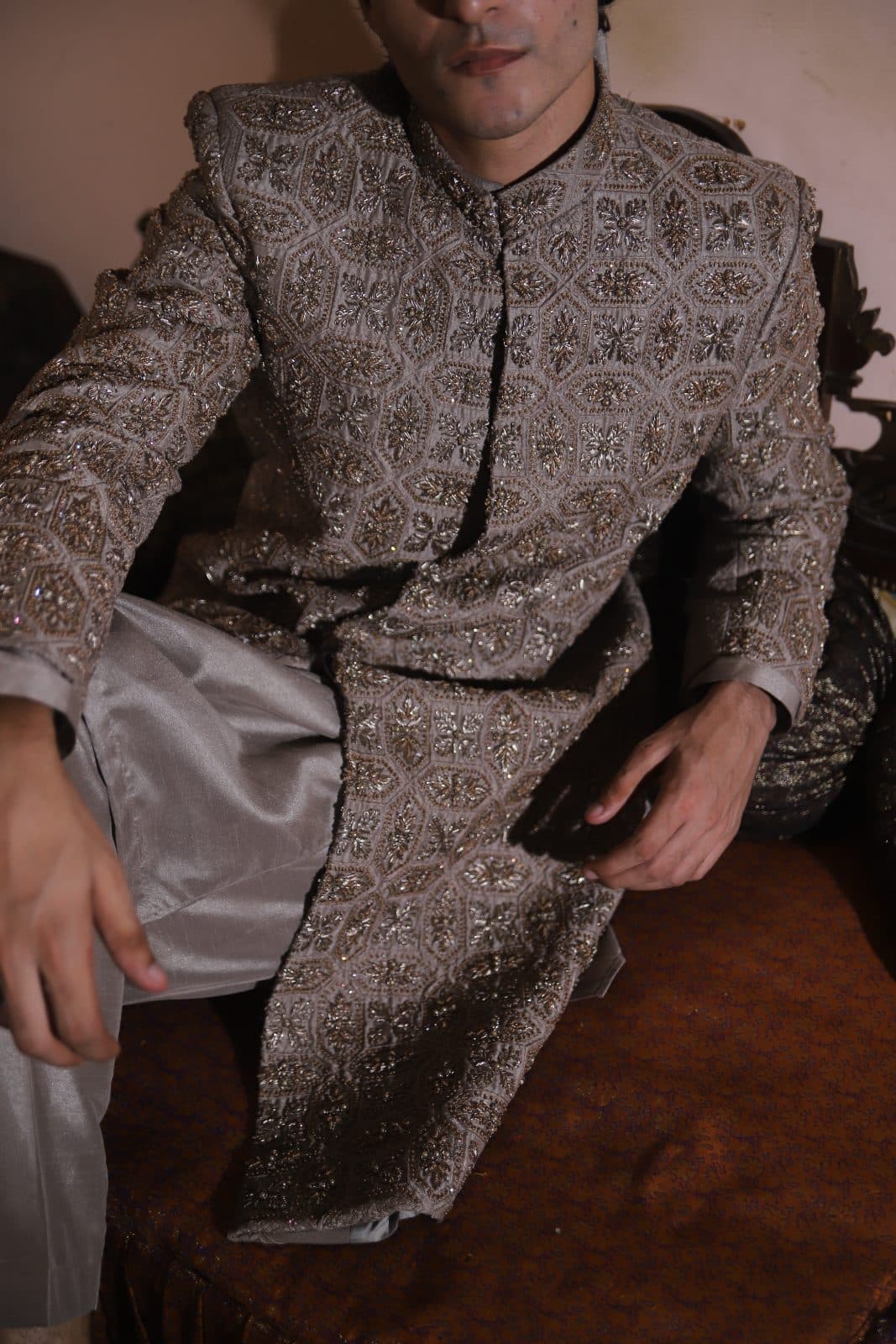
A sherwani is strongest when the Walima is grand, the venue has historical character or the groom wants traditional dress to remain central after the Barat. The Royal Ontario Museum describes the sherwani as a structured South Asian jacket worn at weddings and social functions in its fashion history. That context explains its ceremonial weight without turning it into a mandatory Walima uniform.
Make the Walima sherwani distinct from the Barat. If the first outfit was warm gold or maroon, move towards silver-grey, cool ivory, charcoal or deep green. Reduce the turban and jewellery, or exchange dense metalwork for texture and tonal thread. A recent Lahore example covered by Dawn Images paired a grey sherwani with a lilac and silver bridal look, demonstrating that a suit is not the only contemporary reception option.
Option two
Choose a prince coat for the most adaptable middle ground
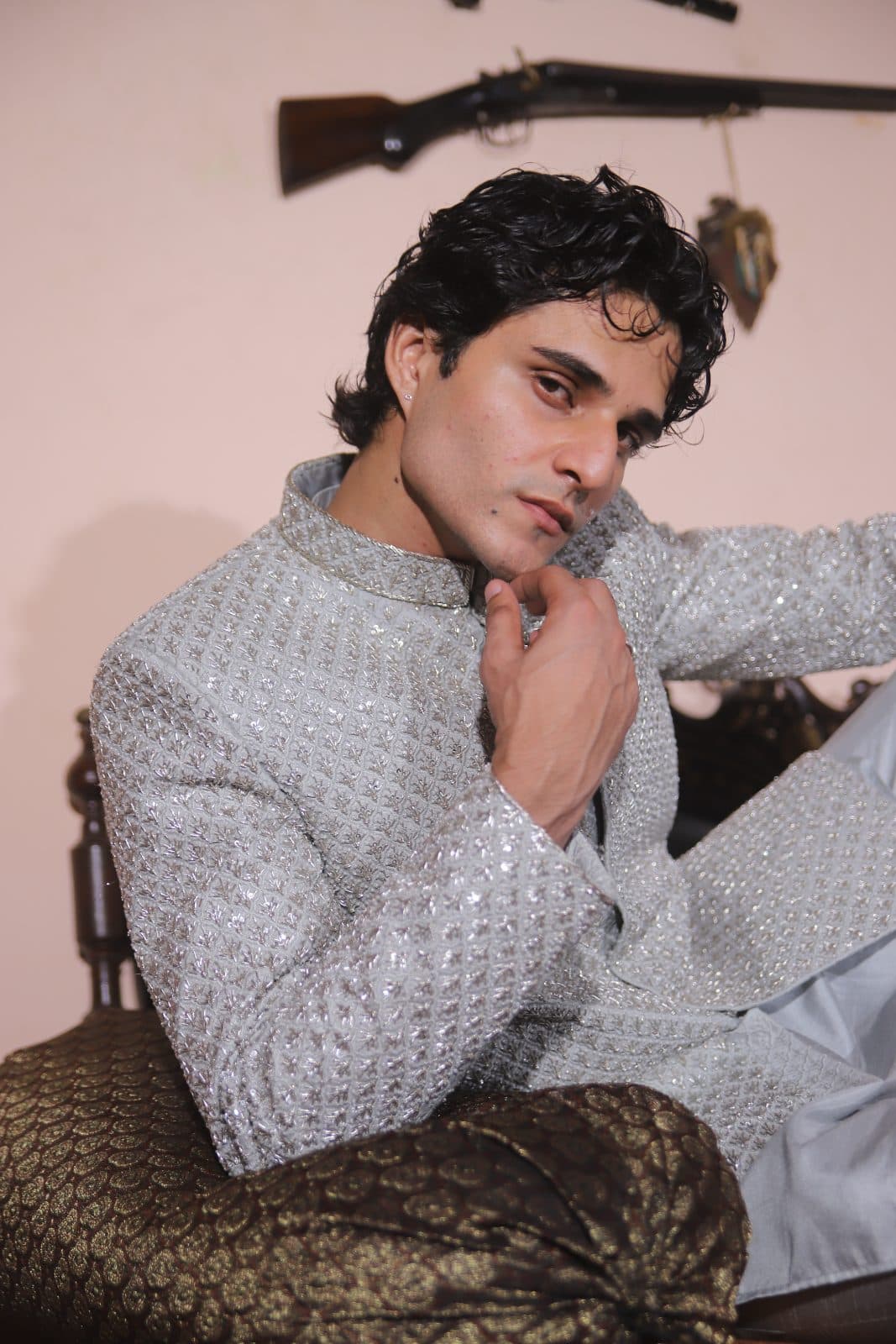
A prince coat gives the groom visible occasion without repeating the long Barat silhouette. It can sit over kurta pyjama for a cultural look or over straight formal trousers for a sharper reception. This makes it especially useful for a hotel, marquee or contemporary hall where the couple wants a formal evening without choosing full Western black tie.
Arsalan Iqbal’s current prince coat collection describes the category as shorter than a typical sherwani and positions it for Walima and reception wear. That is useful designer evidence, not a universal etiquette rule. The coat still has to agree with the venue, bridal palette and the groom’s preferred level of tradition.
Option three
Choose a suit for an intentionally Western reception
A navy, charcoal or deep brown suit works when the venue, invitation and couple’s styling already speak the language of Western formalwear. It is also the easiest choice to rewear. The trade-off is cultural presence. A generic office suit can make the groom look like another guest, so the cut, cloth and finishing need to feel deliberately ceremonial.
Do not call every dark suit a tuxedo. The Emily Post Institute’s black-tie guide defines black tie around a dinner jacket, formal shirt, bow tie and formal footwear; black-tie optional also permits a dark suit. Apply that convention only when the couple wants a Western dress code. It should not be imported as a rule for every Pakistani Walima.
A suit can still carry identity through one controlled detail: an heirloom brooch, ajrak pocket square, locally made footwear or a shirt colour tied to the bridal look. One detail is enough. Several unrelated cultural accents can make the outfit feel assembled rather than designed.
The practical filter
Let venue, season and movement overrule the mood board
Outdoor heat changes the answer. A long lined sherwani, shawl and turban may look excellent in a still photograph and become difficult after an hour of greetings. A summer r/PakistanFashionAdvice discussion centred on jacket fit, sleeves, shirt choice and whether a lighter cloth would have been more comfortable. Those concerns apply across all three outfit categories.
Suitsupply’s formal wedding-attire guidance recommends climate-aware cloth choices and warns against heavy dark cloth outdoors. For South Asian clothes, apply the same principle to the entire construction: outer fabric, lining, embroidery, lower garment and shawl. Air conditioning does not help during outdoor portraits or the arrival.
Movement matters as much as temperature. Button the outfit, sit for ten minutes, climb a step, greet someone with both arms and walk in the actual shoes. A prince coat is not comfortable merely because it is shorter, and a suit is not comfortable merely because it is familiar. Construction wins.
Complete looks
Four Walima outfit formulas that stay coherent
Cool ceremonial
Silver-grey sherwani, tonal trousers, ivory turban, one silver brooch and restrained khussa.
Modern Pakistani
Ivory or silver prince coat, tonal kurta pyjama, polished khussa and no additional shawl.
Evening depth
Black or emerald prince coat, black trousers, one metal accent and polished black footwear.
Western formal
Navy or charcoal suit, white shirt, silk tie or bow tie, pocket square and polished Oxfords.
If the bridal outfit already carries silver, lilac or cool crystal work, repeat the metal temperature rather than the exact colour. For warm gold, rust or maroon, camel, ivory and antique metal accents can connect the two looks. The current sherwani design guide shows four complete colour directions using Kudmayi pieces.
Before approving the outfit
Protect enough time for alterations
The category cannot rescue a poor fit. Confirm shoulder position, collar comfort, chest closure, sleeve length, trouser break and sitting movement. If the outfit is being ordered from abroad, request finished garment measurements rather than relying only on S, M or L. Keep a local alteration appointment and a simpler backup. The complete fitting and ordering checklist explains what to settle before handwork begins.
Quick answers
Questions Pakistani grooms ask about Walima outfits
Does a Walima groom have to wear a suit?
No. A sherwani, prince coat and suit can all be appropriate. Choose according to the couple’s intended dress language, venue and level of cultural formality.
Which option is easiest to rewear?
A dark suit is usually easiest to reuse. A clean prince coat comes next because it can be paired with different kurtas or trousers. A highly ceremonial sherwani has fewer repeat settings.
Can a groom wear black for the Walima?
Yes, especially for an evening event. Use visible texture, check the cloth under venue lighting and add one lighter or metallic element near the face.
How should the Walima differ from the Nikah?
Give each event its own silhouette or colour temperature. The Nikah outfit guide offers lighter and more intimate directions that can contrast with a formal evening Walima.
Compare the silhouettes
Try the formal options before making the category decision.
Visit Kudmayi at Gulberg, M.M. Alam Road, Lahore with the venue, ceremony time and bridal palette. A side-by-side fitting will show whether your Walima needs the length of a sherwani or the shorter structure of a prince coat.