2026 Groom Trends
Latest Sherwani Designs for Pakistani Grooms in 2026
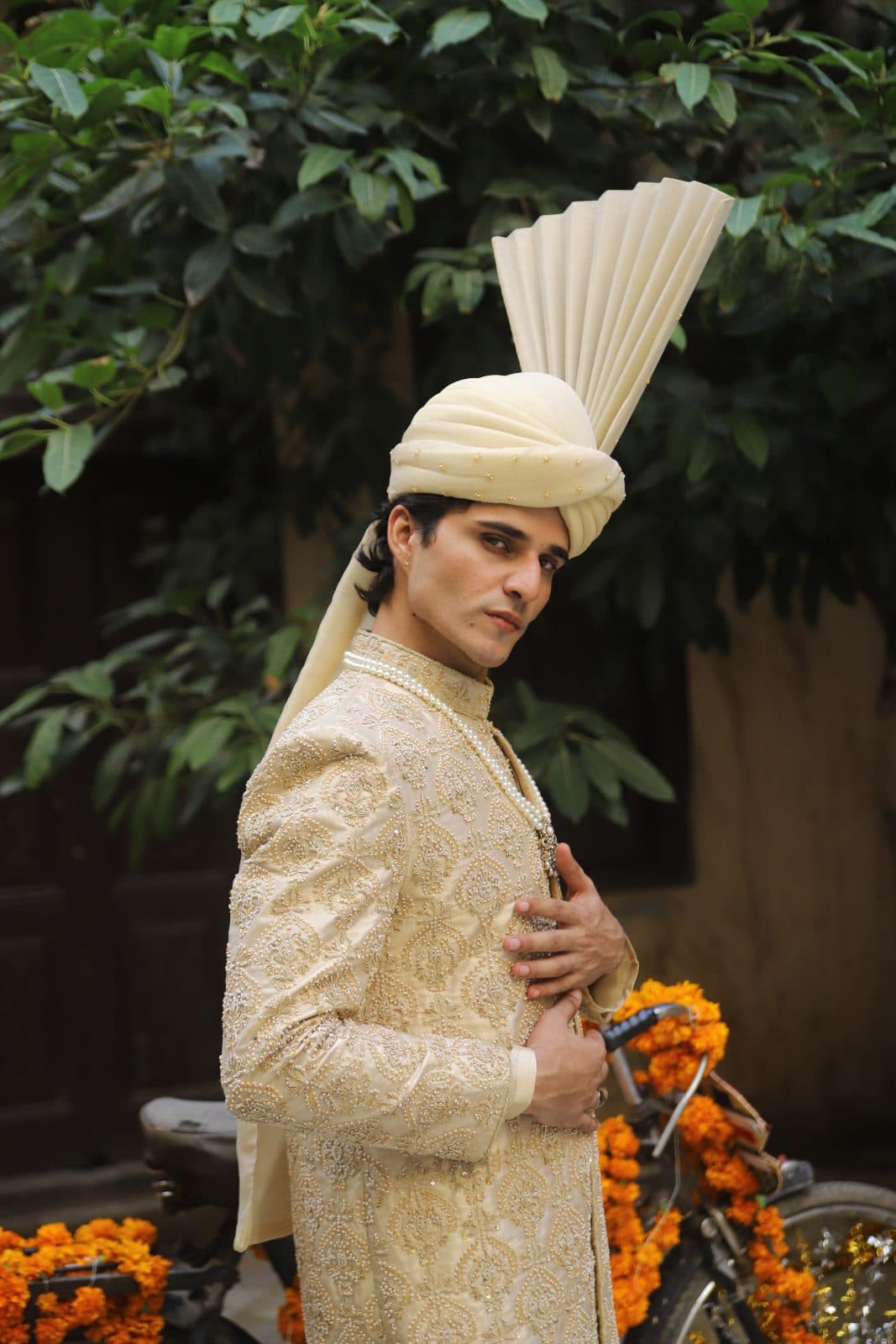
The clearest sherwani direction for Pakistani grooms in 2026 is controlled richness: a clean, confident silhouette with one deliberate surface treatment. Ivory-gold remains strong, but tonal black, silver-grey and deep emerald now give grooms serious alternatives. The useful question is not which colour is trending. It is which version belongs to your event, your complexion and the way you want to look in photographs.
This edit combines four photographs from Kudmayi’s current sherwani catalogue with recently published guidance from Pakistani menswear houses. Those designer reports show direction, not nationwide sales data, so use them as a starting point rather than a rulebook.
The wider picture
What actually looks current in 2026?
Current groomwear is moving in two directions at once. One side is light, tonal and precise: ivory, champagne and pale gold with embroidery that sits close to the base colour. The other is dark and assured: black, maroon and bottle green with controlled shine. Both rely on cleaner cuts and a more intentional finish than an outfit covered in unrelated motifs.
The House of Arsalan Iqbal described cleaner cuts and balanced embroidery in its August 20, 2026 sherwani guide. Its July sherwani report also highlighted tone-on-tone embroidery, raw silk and deep colours. Lajwanti’s August 26, 2026 colour guide presents maroon, bottle green, white, gold and black as event-led options. Together, these sources support variety rather than one compulsory shade.
A current collection page gives that editorial language a useful visual check. Deepak Perwani’s live menswear edit places minimalist ivory, tonal black, champagne, silver and a front-open black sherwani in the same new-arrivals group. That is stronger evidence for a broad 2026 palette than any claim that one colour has won.
Direction one
Ivory and light gold, with less contrast
Ivory-gold is still the most flexible ceremonial palette because it sits beside red, maroon, rust, blush and many pastel bridal looks without becoming a copy of them. The modern adjustment is restraint. Keep the thread, beads and metalwork close in temperature, then let the texture reveal itself as the groom moves.
Zarr E Shaan uses warm ivory with gold handwork and a cream turban, so the outfit reads as one long line. It is a strong Barat direction when the bride is wearing a deeper colour. For a daytime Nikah, the same palette can be simplified by reducing jewellery and keeping the turban lower.
Direction two
Tonal black that depends on texture
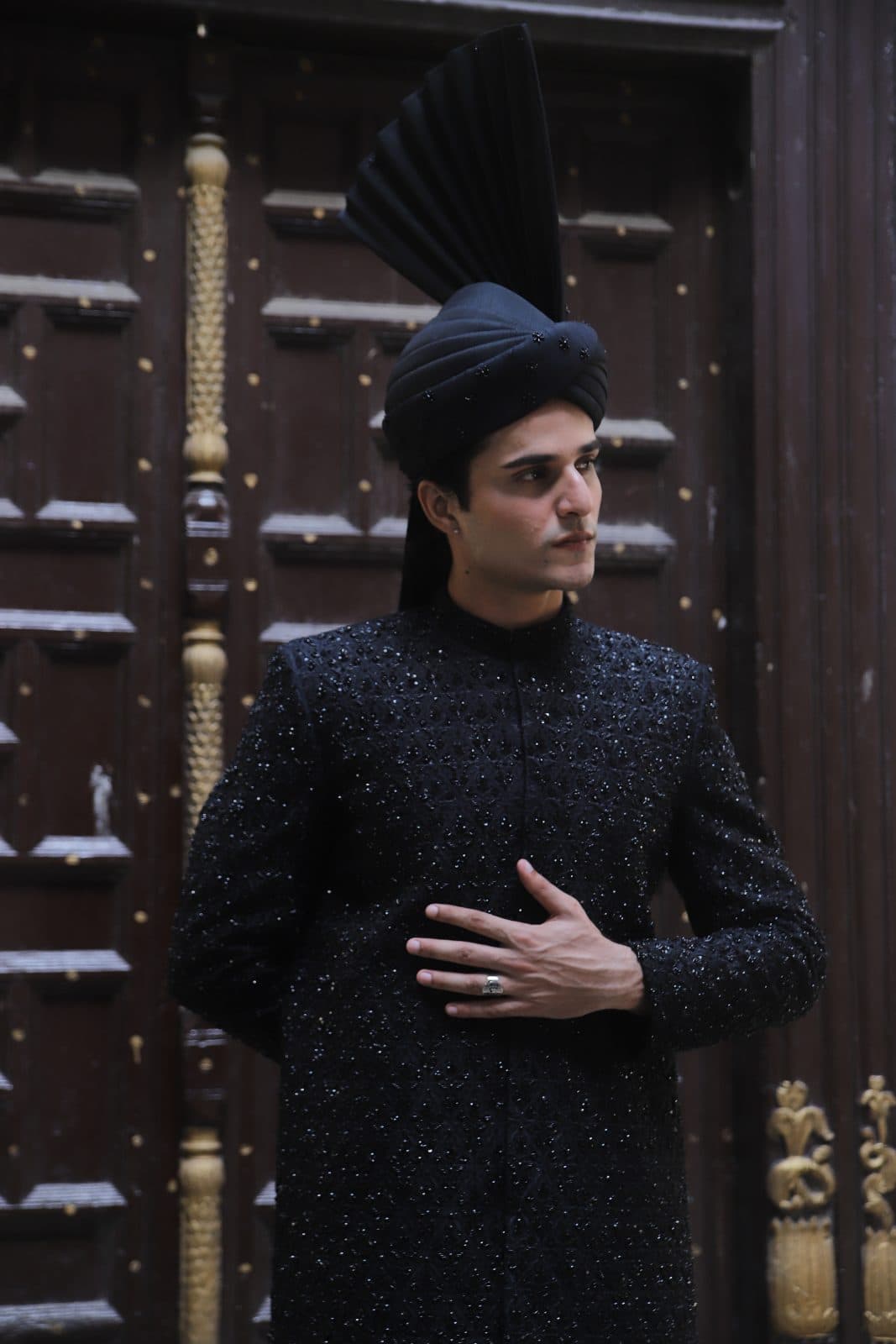
Black feels sharpest for an evening Barat or Walima where the lighting can pick up beads, sequins and tonal thread. A flat black cloth can lose detail in photographs, so the surface needs variation. The answer is not bright contrast. It is texture placed where the face and shoulders receive light.
Shab E Aswad keeps the collar, body and turban in one dark family. The close black embellishment catches light only at certain angles, which gives the look presence without turning it into a gold-and-black costume. Pair it with black trousers for a continuous line, or soften it with an antique metal brooch rather than several competing accessories.
Direction three
Silver-grey for a cooler, quieter ceremony
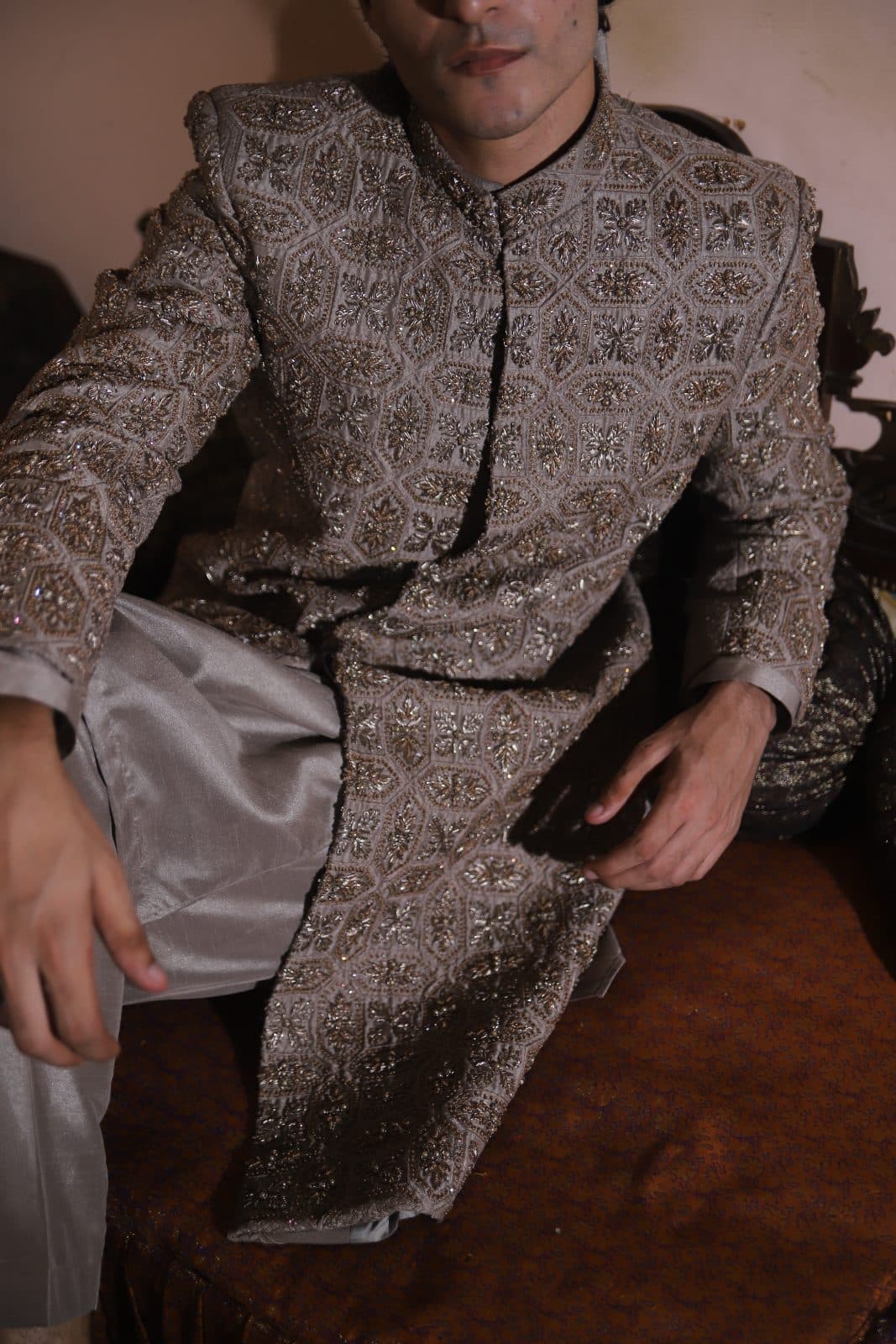
Silver-grey offers the formality of a pale sherwani without the warmth of cream or gold. It works particularly well with cool ivory, lavender, blue, silver and jewel-toned bridal palettes. The exact grey should be tested beside the groom’s face in daylight and warm venue light, since undertone, cloth sheen and photography can change how the same shade reads.
Sang E Marmar shows how repeated geometry can replace a large central motif. Because the embroidery covers the surface evenly, the rest of the styling can stay quiet. A plain trouser and one ring are enough. This is the kind of design that suits a modern indoor Barat or a formal Walima where the groom wants ceremony without traditional gold.
Direction four
Deep emerald with a traditional finish
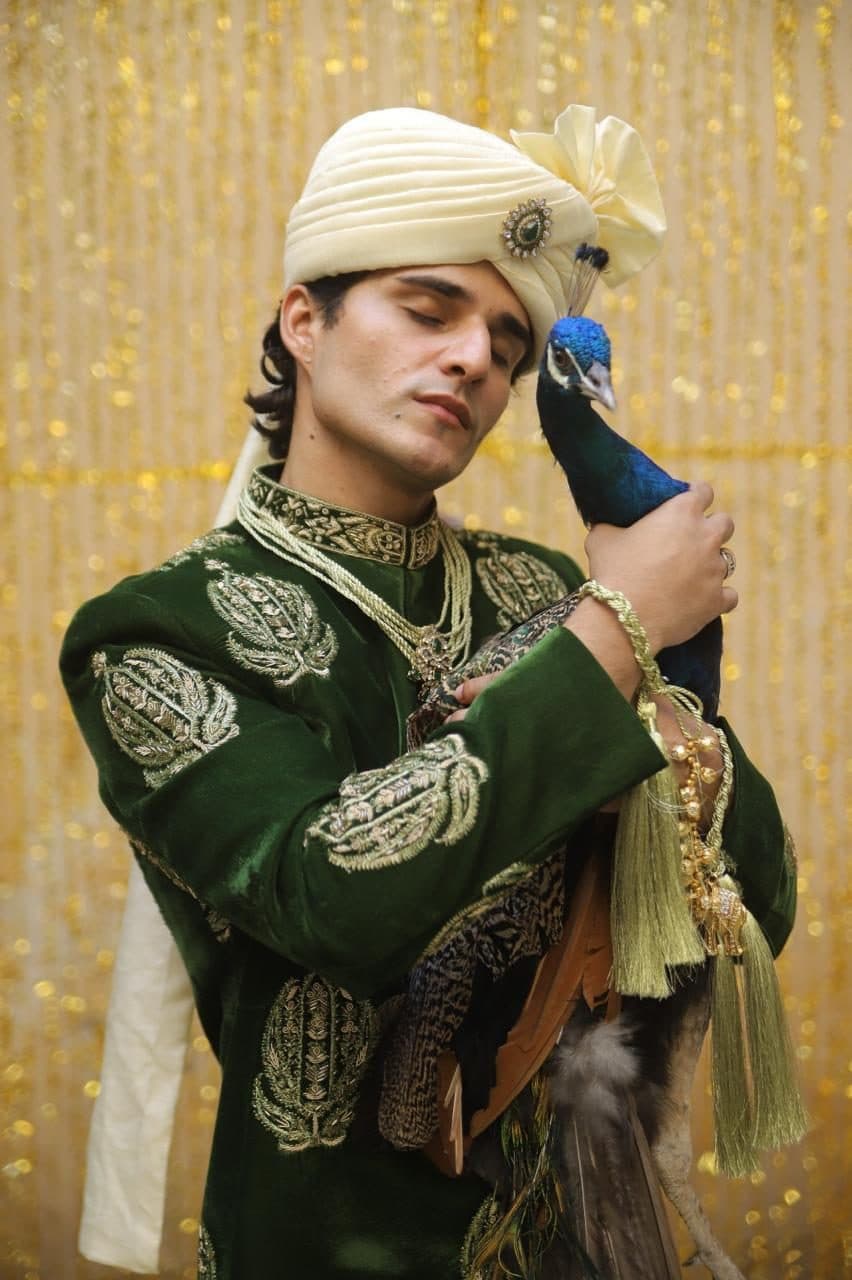
Emerald is the clearest option here for a groom who wants colour. It has enough depth for evening light and enough warmth to sit beside ivory, champagne, gold and many red bridal looks. Velvet increases its visual weight, so it makes most sense for a cooler evening or a winter wedding.
The Shehnai photograph also shows why spacing matters. Its motifs are bold, but the green cloth remains visible between them. The ivory turban lifts the look near the face and keeps the outfit from becoming one dark block. For a simpler version, keep the same colour relationship and remove the larger jewellery pieces.
Fabric and finish
Match the trend to the event, not just the mood board
Amir Adnan’s current Groom Code collection notes silk, velvet, jacquard and brocade alongside zardozi, dabka, sequins and thread work. That range matters because no finish suits every room or season.
| Wedding setting | Strong direction | Keep controlled |
|---|---|---|
| Daytime Nikah | Ivory, pale gold or silver-grey in raw silk | Heavy stones and dark velvet |
| Evening Barat | Ivory-gold, tonal black or emerald | Too many contrast colours |
| Winter wedding | Velvet, jamawar or brocade in deep tones | Overheating under dense lining |
| Walima | Silver-grey, black or a cleaner ivory finish | Repeating the full Barat look |
If the ceremony is the Nikah, use the venue-led Nikah outfit guide to decide whether the occasion needs a sherwani, prince coat or a simpler kurta-waistcoat combination.
Make it personal
How to choose a 2026 sherwani without looking dated next year
- 1. Choose the event. Decide how ceremonial, warm and active the setting will be.
- 2. Choose the silhouette. Set the shoulder, collar, length and trouser line before discussing embroidery.
- 3. Choose one colour family. Test it beside your face, the bridal palette and the venue references.
- 4. Choose one surface idea. Tonal beads, repeated geometry or spaced motifs are enough on their own.
- 5. Complete the look once. Try the turban, shawl, jewellery and shoes together, then remove anything competing with the groom.
If you are still deciding between a long ceremonial coat and a shorter tailored option, use our sherwani versus prince coat comparison. Once you have chosen a sherwani, the five-mistake fitting guide will help you prepare for the first trial.
Quick answers
Questions Pakistani grooms ask about 2026 designs
Is ivory still fashionable in 2026?
Yes. The newer interpretation uses tonal embroidery, a cleaner line and fewer contrast accessories, which keeps ivory from feeling predictable.
Can a groom wear black for the Barat?
Yes, particularly for an evening Barat. Choose textured black-on-black work and test it under the venue lighting so the sherwani keeps its detail in photographs.
Which colour is easiest to coordinate?
Ivory-gold is highly adaptable, while silver-grey works better with cooler bridal palettes. Coordination should repeat one metal or accent, not the bride’s whole outfit.
Should every 2026 sherwani be minimal?
No. Rich handwork still belongs at a formal Barat. What feels current is a clear hierarchy: one strong embroidery language, supported by quieter accessories.
See the cloth in person
Bring your palette, venue and wedding date to Kudmayi.
Compare ivory-gold, silver-grey, tonal black and emerald in natural light at Gulberg, M.M. Alam Road, Lahore. We can help you choose the design direction before the smaller styling decisions begin.